
Discovering the treasures of the Borghese Museum: Rome’s crown jewel
Nestled in Rome’s enchanting Villa Borghese park, the borghese museum houses one of the world’s most spectacular art collections. With over 400,000 visitors annually in 2024 according to the Italian Ministry of Culture, this intimate gallery offers an unparalleled journey through Baroque masterpieces and classical sculptures. Can you imagine standing face-to-face with Bernini’s David or Caravaggio’s revolutionary paintings in such an exclusive setting?
The artistic legacy housed within Villa Borghese
The Borghese Gallery emerged from the passionate vision of Cardinal Scipione Borghese in the early 17th century. This influential nephew of Pope Paul V transformed his villa into one of the world’s most prestigious private art collections, commissioning and acquiring masterpieces that would define baroque artistry for centuries to come.
In parallel : Comprehensive esim comparison for your japan adventure
The collection’s crown jewels include Bernini’s revolutionary sculptures that seem to breathe with life. His “Apollo and Daphne” captures the precise moment of mythological transformation, while “The Rape of Proserpina” showcases marble carved with such delicacy that Pluto’s fingers appear to press into living flesh. These works demand careful observation to appreciate Bernini’s technical mastery.
Caravaggio’s dramatic chiaroscuro technique illuminates several galleries, particularly in his haunting “David with the Head of Goliath” and the sensual “Boy with a Basket of Fruit.” Meanwhile, Titian’s “Sacred and Profane Love” demonstrates the Venetian master’s ability to blend philosophical allegory with artistic brilliance. Understanding these works’ historical context and artistic innovations enhances every visitor’s experience immeasurably.
Also to discover : What Hidden Gems in the UK Can Tourists Explore?
Planning your visit: Essential booking and timing strategies
The Borghese Gallery operates on a strict reservation system that requires advance booking for all visitors. This exclusive approach ensures optimal viewing conditions while preserving the intimate atmosphere of this extraordinary collection.
Reservations must be made through the official booking system, with time slots available every two hours from 9:00 AM to 7:00 PM (last entry at 5:00 PM). The gallery limits visits to exactly 120 minutes, allowing you to fully appreciate the masterpieces without rushing.
- Book tickets 2-4 weeks in advance, especially during peak season (April-October)
- Choose morning slots (9:00-11:00 AM) for the best lighting and fewer crowds
- Avoid weekends and Italian holidays when possible for a more serene experience
- Consider Tuesday or Wednesday visits for optimal conditions
Standard admission costs €15 for adults, with an additional €2 reservation fee. Students and EU citizens under 25 enjoy reduced rates. The investment proves worthwhile when you consider the exclusive access to works by Bernini, Caravaggio, and Titian in their original palatial setting.
Navigating the gallery’s architectural splendor
The Villa Borghese itself serves as a magnificent canvas for the masterpieces it houses. Built in the early 17th century by Cardinal Scipione Borghese, this architectural gem seamlessly blends neoclassical elegance with baroque grandeur, creating an environment where art and space exist in perfect harmony.
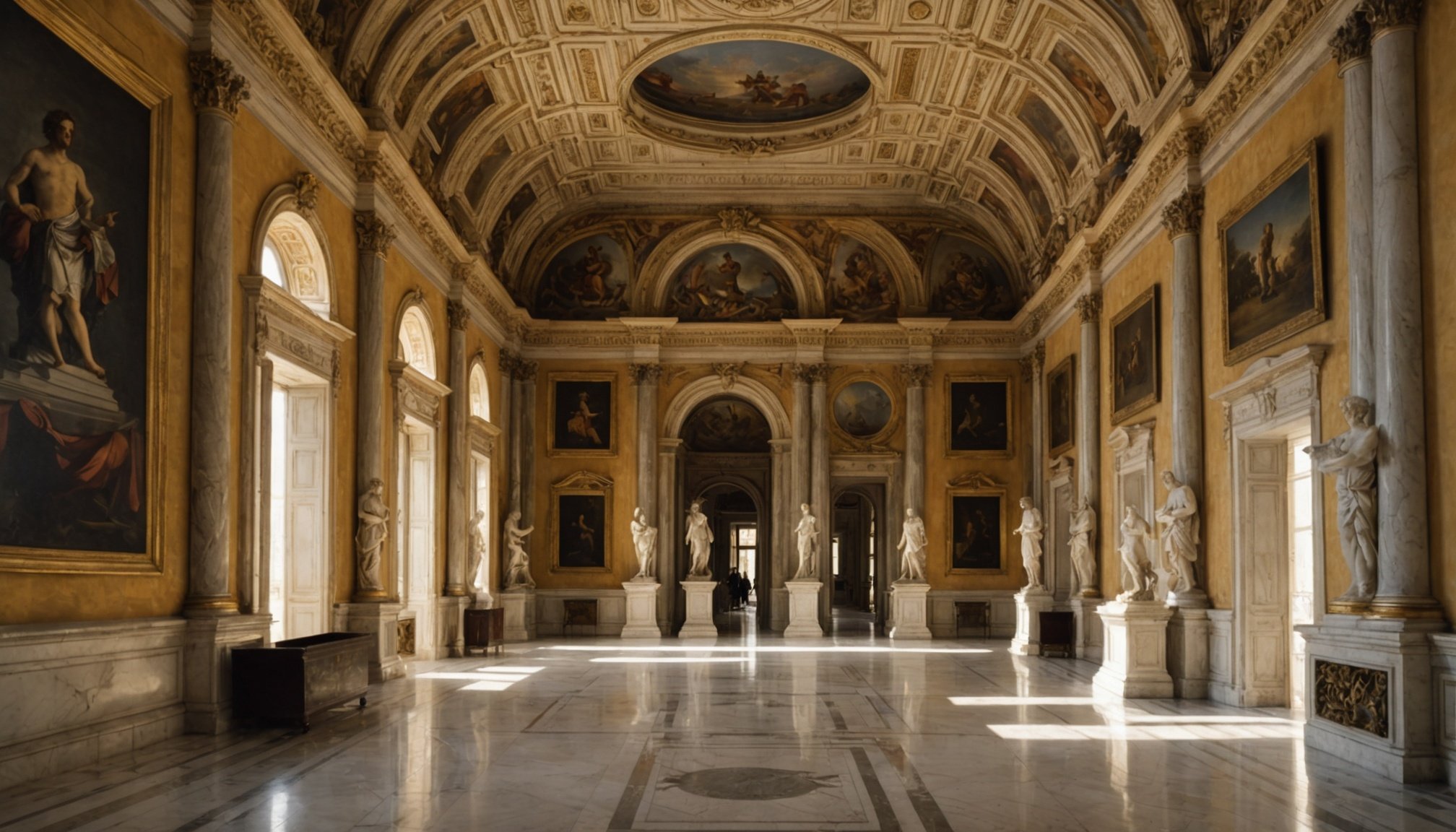
Each room tells its own story through meticulously preserved frescoes and ornate ceiling decorations. The grand entrance hall welcomes visitors with soaring ceilings adorned with mythological scenes, while the intimate salon spaces feature delicate stucco work that complements the displayed sculptures without overwhelming them.
The gallery’s thoughtful layout enhances your artistic journey. Natural light flows strategically through tall windows, illuminating Bernini’s marble sculptures to reveal their incredible detail and emotional depth. The carefully planned circulation between rooms creates a rhythm that allows you to appreciate each masterpiece while maintaining a sense of discovery.
This harmonious relationship between architecture and art transforms your visit into an immersive cultural experience, where the villa’s historical ambiance enriches every encounter with the extraordinary collection within its walls.
Masterpiece highlights: What not to miss during your two-hour window
Your journey through Villa Borghese begins with Bernini’s masterpieces in the ground floor galleries. The Apollo and Daphné sculpture captures the exact moment of transformation, where marble becomes flesh and bark with breathtaking realism. Bernini carved this between 1622 and 1625, when he was barely in his twenties, demonstrating technical mastery that still astounds visitors today.
Move directly to Bernini’s David, a revolutionary departure from classical representations. Unlike Michelangelo’s contemplative figure, this David is caught mid-action, muscles tensed as he hurls the stone toward Goliath. Cardinal Scipione Borghese commissioned this piece specifically for his villa, making it one of the few Bernini sculptures that remains in its original intended location.
The painting galleries upstairs house Caravaggio’s sacred works that revolutionized religious art. His Boy with a Basket of Fruit showcases the artist’s early mastery of chiaroscuro, while the Sick Bacchus reveals Caravaggio’s ability to blend mythology with raw human emotion. These works predate his later dramatic religious scenes, offering insight into his artistic evolution.
Reserve time for Titian’s Sacred and Profane Love, a complex allegorical painting that scholars still debate today. This Renaissance masterpiece demonstrates Titian’s unparalleled skill with color and composition, making it one of the gallery’s most intellectually engaging pieces.
Enhancing your cultural experience in the surrounding area
Villa Borghese’s sprawling gardens offer far more than just the gallery itself. The Etruscan Museum at Villa Giulia houses one of the world’s finest collections of pre-Roman artifacts, while the nearby Galleria Nazionale d’Arte Moderna showcases Italy’s journey through contemporary art movements.
These cultural treasures create perfect opportunities for thematic explorations. You might trace the evolution from ancient Roman sculptures in the Borghese to Etruscan masterpieces next door, then conclude with modern Italian interpretations at the contemporary gallery. Each venue requires separate tickets, but their proximity makes cultural hopping effortlessly elegant.
The sophisticated Parioli district surrounding the park boasts exceptional dining options. Metamorfosi, Rome’s three-Michelin-starred restaurant, offers innovative cuisine just minutes away. For a more intimate setting, the wine bar Enoteca Costantini provides carefully curated selections perfect for discussing your artistic discoveries over aperitivo.
Many visitors combine their Borghese experience with nearby Villa Giulia or extend their cultural journey to the Palazzo Massimo’s classical sculptures. This creates a comprehensive art historical narrative spanning millennia, all within walking distance through Rome’s most beautiful park setting.
Frequently asked questions about this prestigious venue
How do I book tickets for the Borghese Gallery in advance?
Reservations are mandatory and must be made online through the official website. Tickets become available two months prior to your visit date. Book early as slots fill quickly, especially during peak tourist seasons.
What are the opening hours and best times to visit the Borghese Museum?
The gallery opens Tuesday to Sunday from 8:30 AM to 7:30 PM, closed on Mondays. Early morning slots offer quieter experiences, while late afternoon visits provide beautiful natural lighting for viewing the masterpieces.
What famous artworks can I see at the Borghese Gallery?
You’ll encounter Bernini’s stunning sculptures including Apollo and Daphne, plus masterpieces by Caravaggio, Titian, and Raphael. The collection represents one of the world’s finest displays of Baroque and Renaissance art.
Is there a dress code for visiting the Borghese Museum in Rome?
While there’s no strict formal dress code, visitors should dress respectfully and modestly. Avoid revealing clothing, short shorts, or tank tops. Smart casual attire is perfectly appropriate for this prestigious cultural venue.
How long should I plan to spend at the Borghese Gallery?
Visits are limited to two-hour slots due to conservation requirements. This timeframe allows you to appreciate the main highlights without rushing. Consider booking multiple slots if you want extended viewing time.